

Technical Knowledge
What are the processing steps of metal shaft of machine rubber roller?
Sep
The processing method for the shaft of machine-used rubber rollers is a precise technological process involving multiple steps. The key lies in ensuring the accuracy, strength, and wear resistance of the shaft to meet the high-performance operational requirements of the rubber rollers in mechanical equipment. The following are the main processing methods for the shaft of machine rubber rollers:
I. Material Selection
Firstly, selecting the appropriate material is the foundation of shaft processing. The shafts of rubber roller for machine typically adopt high-quality steel materials, such as alloy steel or stainless steel. These materials possess excellent mechanical properties, corrosion resistance, and wear resistance, capable of meeting the requirements for long-term operation.
II. Rough Machining
Turning: The selected steel material undergoes turning to remove excess material and initially form the basic shape and dimensions of the shaft. During turning, the cutting speed and feed rate must be strictly controlled to ensure processing accuracy and surface quality.
Milling: For complex shapes or holes and grooves on the shaft, milling can be employed. Milling can precisely remove material to achieve the required shape and dimensions.
III. Finish Machining
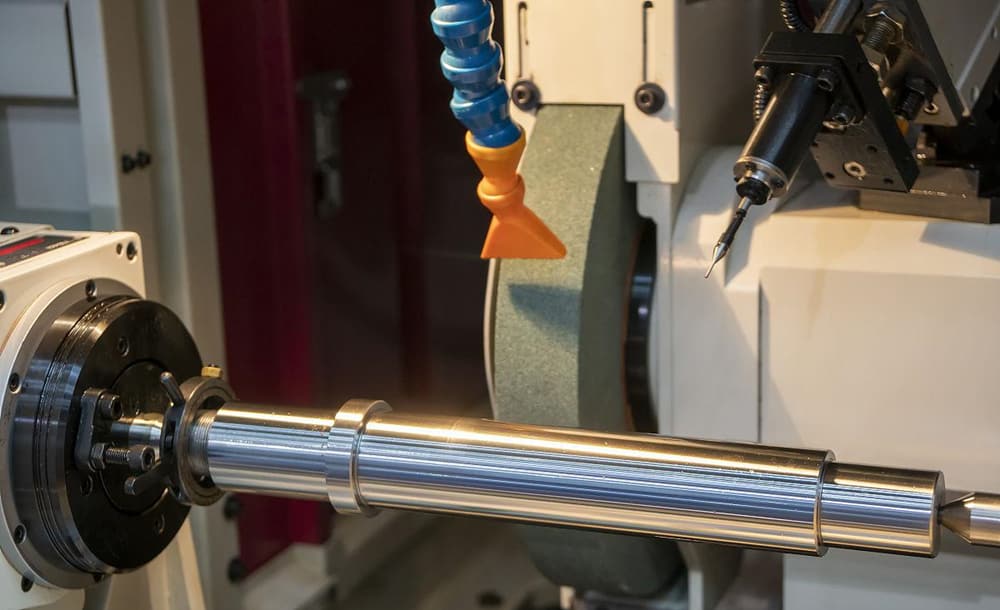
Grinding: After rough machining, the shaft undergoes grinding to improve surface finish and dimensional accuracy. During grinding, appropriate grinding wheels and grinding parameters need to be selected to achieve the desired processing results.
Drilling and Tapping: Holes are drilled and tapped at both ends of the shaft for subsequent installation and fixation. The positions and dimensions of drilling and tapping must be precisely controlled to ensure accurate connection of the shaft with other components.
IV. Heat Treatment
To enhance the hardness and wear resistance of the shaft, heat treatment is usually performed. Heat treatment includes quenching, tempering, and other processes, which improve the mechanical properties of the material by altering its internal structure. During heat treatment, temperature and time must be strictly controlled to ensure the treatment effect meets design requirements.
V. Surface Treatment
Surface treatment of the shaft is also a crucial step in the processing process. Common surface treatment methods include sandblasting, zinc plating, chromium plating, etc. These treatments can improve the corrosion resistance and aesthetics of the shaft, while also contributing to improving the friction coefficient and fitting accuracy with other components.
VI. Quality Inspection
The processed shaft undergoes rigorous quality inspection. Inspection content includes dimensional measurements, surface quality checks, hardness tests, etc. Quality inspection ensures that the shaft’s various performance indicators meet design requirements, providing reliable support for subsequent rubber roller assembly and use.
The processing method for the shaft of machinery rubber roller is a precise technological process involving multiple steps. By selecting appropriate materials, employing precise processing techniques, and conducting strict quality inspections, high-quality, high-performance shafts can be produced, providing robust support for the stable operation of machine used rubber rollers.
